
13 de April, 2026

Correcting certificates for citizenship is one of the most crucial steps—and often the one that raises the most questions for those seeking recognition of European nationality. Whether for Portuguese, Italian, or Spanish citizenship, the golden rule is the same: the information across all vital records (birth/marriage/death certificates) must be consistent.
Many families carry discrepancies in names, surnames, and dates due to historical records that were created manually. The problem is that even small errors can be interpreted by foreign authorities as uncertainty about an ancestor’s identity, which may lead to the denial of a citizenship application.
In this article, we will identify a birth certificate correction may be required and the fastest way to correct your certificates.
Realizing your goal of living in Europe or obtaining European citizenship can be simpler than you think. We offer personalized support to make the immigration process more accessible and uncomplicated.
In general, when applying for citizenship, corrections are most commonly required in the following documents:
These records must align with each other, as they form the legal chain that proves your lineage.
As we explained in our article on genealogy research, during the 19th century, naming conventions were not standardized, and the order of surnames in official records was not always consistent. This led to a large number of discrepancies.
Even in more recent scenarios, these inconsistencies can still occur—especially when full record certificates are transcribed or digitized. In some cases, when a birth certificate is retyped or reproduced, clerks may unintentionally change certain details.
Here are the most common errors that require a birth certificate correction or document amendment:
A correction becomes essential when the error creates doubt about the origin or identity of the individual.
Important: Not every discrepancy requires a formal correction process. The main criterion is legal certainty. If a spelling variation does not prevent the clear identification of the person, it may still be accepted. We explain this further below.
Today, the process of correcting records or requesting a birth certificate correction or amendment is much more efficient, but it is important to understand which approach applies depending on the situation.
Obvious errors that do not require extensive supporting evidence can usually be corrected directly through the vital records office where the certificate was issued. This is generally a faster and less costly procedure.
Ideal for: simple spelling mistakes, swapped letters, or clearly typographical date errors.
When the error is more complex, involves significant changes to surnames, or when the issuing authority refuses to make the correction due to uncertainty, it may be necessary to file a legal request with the support of an attorney.
Typically, the process takes place in the jurisdiction where the certificate was issued or where the applicant resides.
Ideal for: cases where extensive documentation is required to prove that different names refer to the same individual.
Before requesting a birth certificate correction or amendment, it is also important to understand what type of document the consulate handling your citizenship application will require.
In the United States, birth certificates are often issued in a short-form version, which contains only basic information. Some states also provide a long-form or full certificate, which includes more detailed data from the original record.
For citizenship applications, it is common to assume that a full or long-form certificate will always be required. However, in practice, this is not always the case. There are situations where consulates have accepted short-form birth certificates, as long as the information is sufficient to establish identity and lineage. In some specific cases, U.S. documents have even been accepted without apostille or certified translation.
However, this should not be treated as a general rule. Requirements can vary significantly depending on the consulate and the country involved.
For this reason, having guidance from a specialized agency or professional can make a significant difference, ensuring that you meet the correct requirements from the beginning and avoid unnecessary steps.
The general rule is simple: the error must be corrected in the country where the document was issued. If the error is in a U.S. birth certificate, it must be corrected in the United States; if it is in a Portuguese birth record, it must be corrected in Portugal.
Expert tip:
The document from the person’s place of birth—such as a Portuguese birth record—is typically considered the primary reference, as it is the original record of birth. All other documents should be aligned with the information stated in that record (the same applies to Italian or Spanish records).
One of the most common mistakes applicants make is trying to correct every discrepancy unnecessarily, which can lead to wasted time and money. On the other hand, ignoring significant issues can result in delays or even rejection.
A proper evaluation is essential to determine whether a birth certificate correction or amendment is truly required.
At Atlantic Bridge, our team of genealogists not only helps locate the documents required for your citizenship application, but also analyzes your certificates to determine whether a birth certificate correction or document amendment is truly necessary.
This prevents unnecessary expenses, avoids denials, and ensures that your case is legally consistent. If a court-ordered amendment is required, we work with qualified attorneys to support your case. In addition, we provide full assistance in obtaining certified copies and document authentication—essential steps for a successful application.
If you are unsure whether your documents need correction, getting expert guidance can help you avoid mistakes and move forward with confidence in your citizenship process.

Author:
Silvia Resende
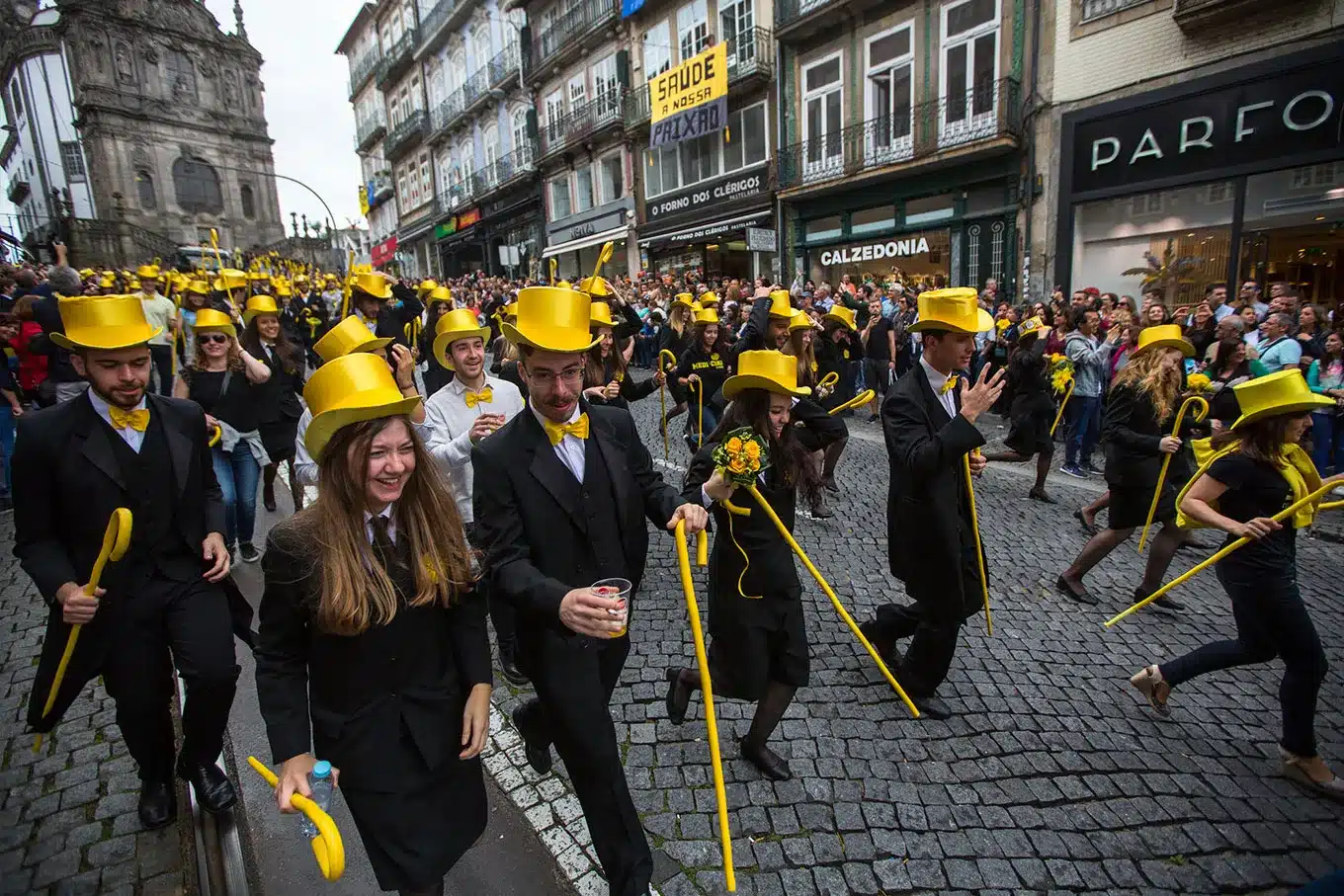
Queima das Fitas (Burning of the Ribbons) is a party that takes place every year in several cities in Portugal and celebrates the end of the academic year for university students. See the 2025 schedule!

Author:
Atlantic Bridge
3 de May, 2025


